Handwriting
“The importance of handwriting in developing pupils’ writing cannot be overstated. Fluent handwriting is a significant predictor of positive writing outcomes, while a lack of such fluency can constrain pupils.”
The Writing Framework 2025
At St Paul’s School, we believe that fluent, legible handwriting is an essential foundation for successful writing. Handwriting is not simply something children acquire through completing written work; it is a skill that needs to be explicitly taught, carefully modelled, practised and mastered.
Our handwriting curriculum is carefully sequenced from EYFS to Year 6, reflecting the developmental needs of children at each stage. We take a mastery approach, ensuring that children have secure foundations in the physical and transcription skills needed for writing before progressing to increasingly complex handwriting.
This reflects the principles of the Department for Education's 2025 Writing Framework, which states that handwriting should be taught “precisely, in a clearly sequenced progression”. The framework also emphasises the importance of developing automaticity, so that handwriting becomes sufficiently fluent for children to focus their attention on composing and communicating their ideas.
Knowledge and Skills Progression
EYFS – Developing the foundations
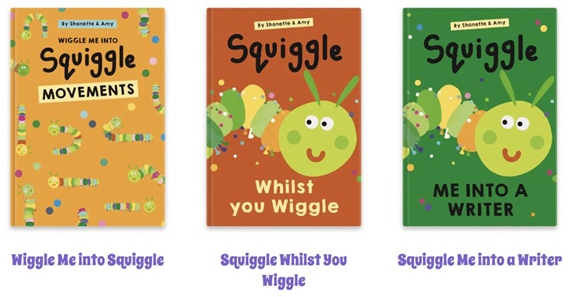
In EYFS, children begin by developing the gross and fine motor control needed for writing. We use the Squiggle Early Learning programme, which supports children's physical development through neurological and physiological movements that help them develop the skills needed to make marks and eventually write. As children become ready for formal letter formation, we use the Little Wandle formation rhymes to support consistent and accurate letter formation.
Year 1 – Secure letter formation
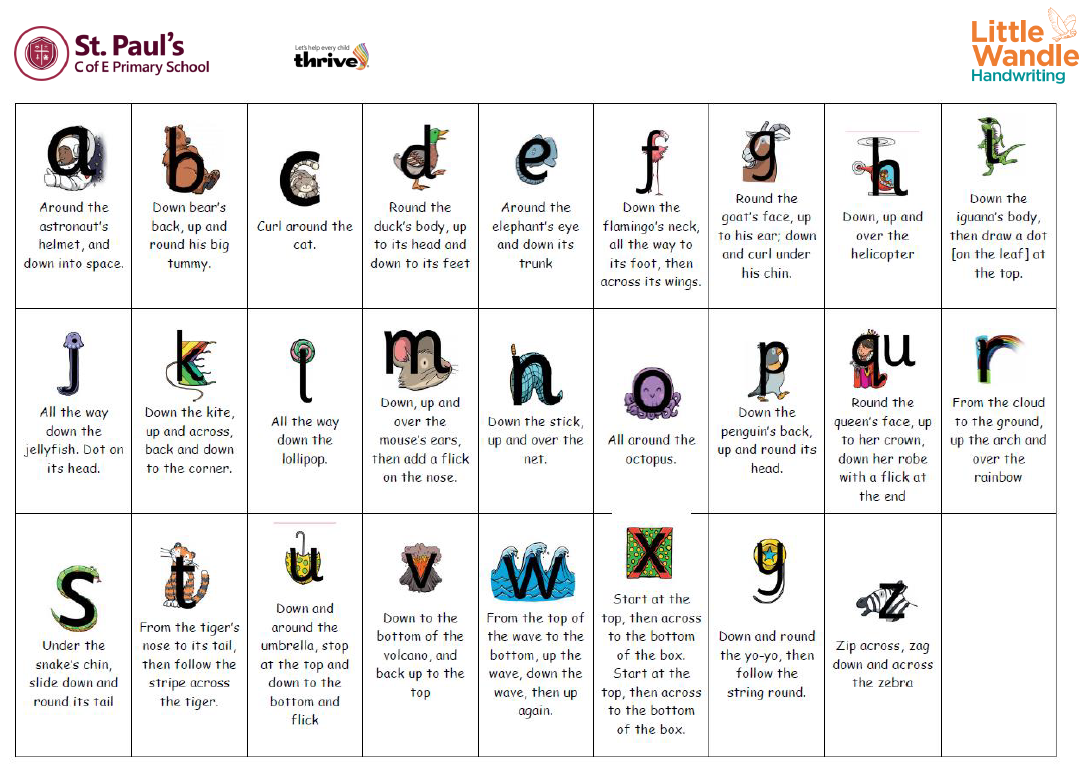
Children develop accurate, consistent unjoined letter formation, learning to start and finish letters in the correct places. They develop their understanding of letter families and practise forming lower-case letters, capital letters and digits. We use the Little Wandle formation rhymes to reinforce correct formation.
Year 2 – Preparing to join
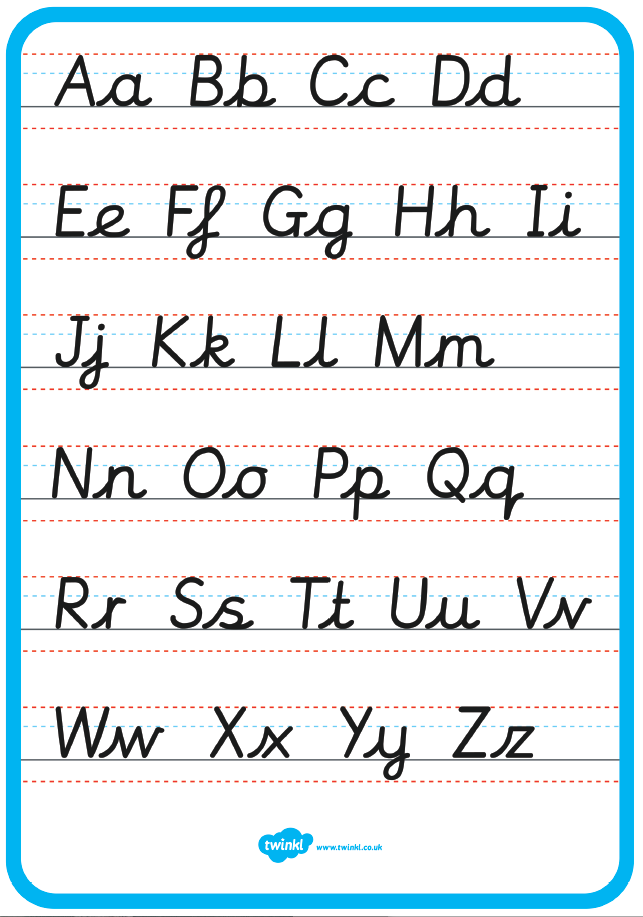
Once children have developed secure letter formation, they begin to develop the diagonal and horizontal strokes needed for joining. Children are introduced to pre-cursive writing and the four joins, while continuing to develop accurate letter sizing, spacing and positioning.
Years 3–4 – Developing fluency
Children continue to practise and refine the four joins, developing greater consistency, legibility and fluency. Particular attention is given to letter size, spacing and the quality of joins. Children are increasingly expected to apply their handwriting skills consistently across their written work and throughout the wider curriculum.
Years 5–6 – Developing automaticity
By Years 5 and 6, the focus is on producing handwriting that is fluent, consistent and increasingly automatic. Children develop the confidence and stamina to maintain their handwriting across longer pieces of writing and make appropriate choices about whether to use a pen or pencil for different tasks.
Ready to Write
Across the school, we use a consistent 'Ready to Write' routine to help children develop positive physical habits for writing:
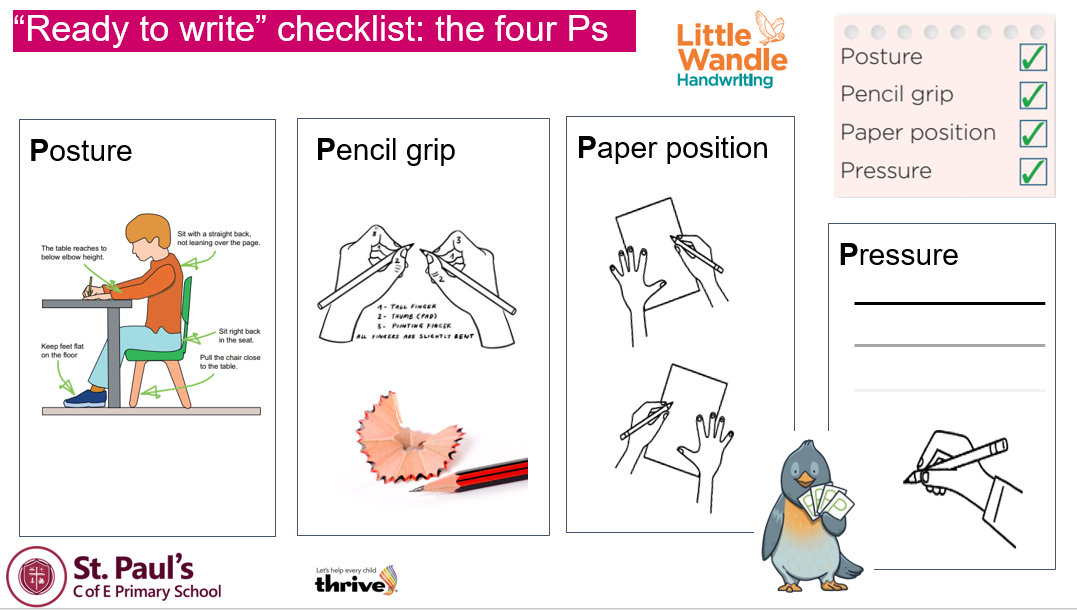
These four prompts encourage children to consider how they are physically prepared to write and support the development of control, fluency and comfort.
We deliberately do not rush children into joined handwriting. Secure and consistent letter formation provides the foundation upon which fluent joined handwriting can be built. Once children are ready, joins are explicitly taught and practised so that they become increasingly automatic.
Our aim is for every child to leave Year 6 with handwriting that is fluent, legible, accurate and increasingly automatic, giving them a secure foundation for writing successfully across the curriculum and into secondary school.


